
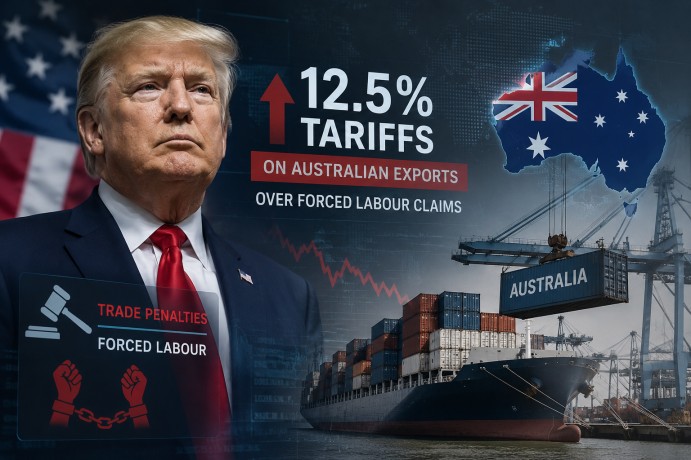
The United States has announced the implementation of a 12.5% tariff on numerous Australian exports, expressing concerns over Australia’s insufficient measures to prevent the infiltration of products made with forced labor into supply chains. This decision has been met with strong opposition from the Australian government, which labeled the tariffs as unjustified and inconsistent with the terms of the Australia-U.S. Free Trade Agreement. Don Farrell, Australia’s Trade Minister, emphasized that Australia boasts some of the most stringent laws globally against forced labor and modern slavery, urging the U.S. to retract the tariffs immediately.
The newly introduced tariff affects a diverse array of Australian exports, although significant export sectors such as beef, gold, various agricultural commodities, aircraft components, and specific mineral and industrial products have been excluded. Australian authorities contend that the U.S. action is not supported by evidence and caution that it may negatively impact bilateral trade relations. Meanwhile, business groups and industry leaders have voiced their disapproval, criticizing the measure as both unfair and detrimental to Australian exporters.
This move by the U.S. is part of a broader initiative by the Trump administration to enforce trade policies targeting numerous countries over issues related to forced labor. By imposing these tariffs, the administration aims to apply pressure on trading partners to enhance their enforcement against products linked to forced labor entering global markets. However, the decision has sparked controversy, especially given Australia’s existing legal framework combating modern slavery.
Australian officials argue that their country’s robust legislation and enforcement mechanisms should exempt them from such punitive measures. They stress that the tariffs could strain the longstanding trade relationship between the two nations, potentially leading to economic repercussions for industries reliant on the U.S. market.
The backlash from this decision highlights the complexities and potential fallout of international trade policies, particularly when they intersect with human rights issues. As the situation unfolds, both countries will likely engage in diplomatic discussions to address the concerns and seek a resolution that aligns with their trade agreement and mutual interests.