
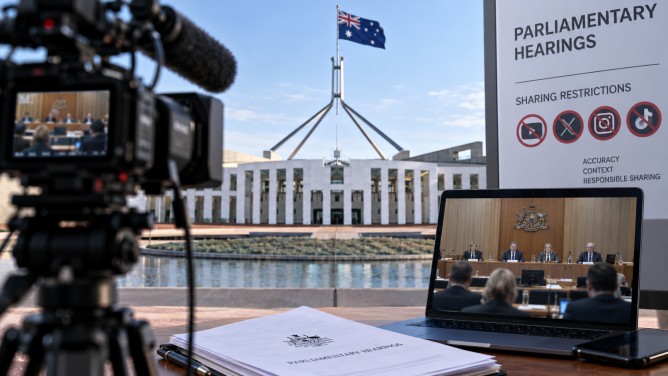
Australia’s leading public officials are advocating for limitations on the editing and online distribution of video clips from parliamentary hearings. They argue that sharing footage without proper context can lead to officials being subjected to mockery and harassment. The Secretaries Board, which comprises the heads of various government departments, voiced concerns that public servants have not agreed to their images and testimonies being used for political agendas or in ways that could negatively impact both individuals and the broader public service.
The board has suggested that video content from parliamentary hearings should not be altered or captioned when posted online. They also proposed establishing restrictions on political content that singles out officials for mocking or harassment. As an alternative, the board recommended making full recordings and transcripts of hearings available to the public, with the comments section disabled. This approach, they believe, would ensure that public scrutiny is concentrated on the evidence, administrative processes, and accountability rather than on individual public servants.
This proposal comes in the wake of concerns raised by Celia Perkins, the deputy secretary of the Defence Department. Perkins expressed that public servants who provide evidence do not agree to their testimonies being re-shared on social media platforms outside the official parliamentary proceedings. Despite these concerns, her request for restrictions was turned down by a Senate committee, following advice from the Senate clerk.
Opposition to the proposed restrictions has come from Greens senator Steph Hodgins-May, who argued that parliamentary hearings are inherently public events. She believes that Australians should retain the right to access and share their content freely. Hodgins-May cautioned that placing limitations on how parliamentarians can utilize such footage could weaken the effectiveness of parliamentary scrutiny and diminish transparency. At the same time, she acknowledged the importance of maintaining respectfulness in public discourse.