
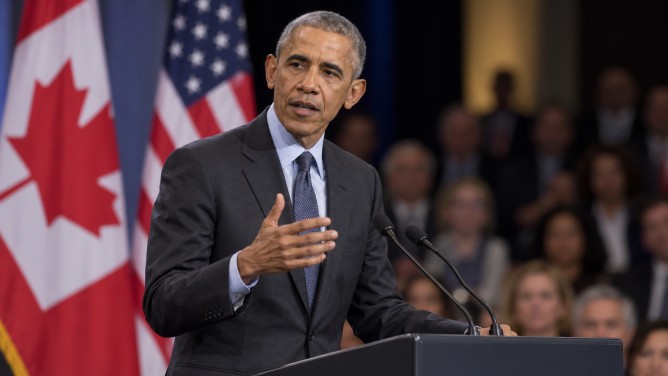
At a recent Democratic campaign rally in Detroit, Michigan, former President Barack Obama took a jab at President Donald Trump’s trade policies, especially the tariffs imposed on Canadian goods. Obama criticized these measures, arguing that they have led to increased costs for both businesses and consumers in the United States.
Obama’s remarks come amid a heated trade dispute between the U.S. and Canada, which has gained significant attention ahead of the midterm elections. With a touch of sarcasm, Obama referred to Canada as a “well-known evil empire” and mocked Trump’s past comments about potentially making Canada the 51st state of the U.S. He emphasized the long-standing relationship between the two nations and expressed concern over the economic impact of the tariffs, particularly in states like Michigan.
The automotive industry in Michigan, which relies heavily on cross-border supply chains, is particularly vulnerable to the rising production costs resulting from these tariffs. Obama’s comments highlighted this vulnerability, pointing out that higher import duties undermine efforts to keep goods affordable.
The trade tensions have escalated as the Trump administration imposed tariffs on various Canadian products, such as metals, lumber, and vehicles. In response, Canadian Prime Minister Mark Carney introduced counter-tariffs, further straining the economic ties between the two countries. The conflict intensified when Washington imposed additional restrictions on selected Canadian imports.
In a bid to manage the situation, Trump later announced plans to remove some existing tariffs while introducing new duties on other products. This shifting landscape of trade measures has caused unease among businesses that depend on cross-border commerce, raising concerns about the economic and political consequences of the dispute.
Obama’s address serves as a reminder of the potential fallout from the ongoing trade war, especially for states like Michigan, where manufacturing and trade with Canada are critical components of the local economy. As the midterm elections approach, the trade policies and their impacts remain a pivotal issue for voters and political leaders alike.