
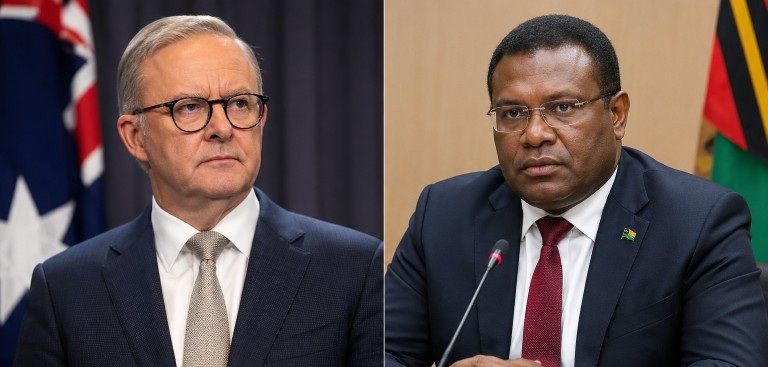
Australia has entered into an important security and development agreement with Vanuatu, which had been in the works for some time. Referred to as the Nakamal Agreement, this pact is designed to enhance collaboration between the two Pacific nations. It grants Australia the ability to be consulted on significant third-party investments in Vanuatu’s critical infrastructure, solidifying Australia’s position as a primary security and policing ally for the island country.
The agreement experienced delays due to Vanuatu’s concerns about potentially restricting its ability to attract investments from other nations. However, officials have clarified that the agreement upholds Vanuatu’s sovereignty and explicitly prevents the establishment of foreign military bases or the militarization of its infrastructure. This aspect was crucial for Vanuatu as it sought to maintain its autonomy while engaging in international agreements.
As part of the agreement, Australia has pledged substantial funding over the next ten years, reflecting its commitment to increasing its influence in the Pacific region. This move comes amid heightened competition with China, which has significantly invested in Vanuatu, financing infrastructure projects such as government buildings and transport networks. Despite this new agreement, Vanuatu has expressed its intention to continue fostering economic ties with China, while adhering to principles of transparency.
The Nakamal Agreement is indicative of a broader strategy by Australia to strengthen its partnerships with Pacific countries. This initiative is driven by growing concerns over strategic competition and foreign influence in the region. By securing such agreements, Australia aims to bolster its presence and play a more central role in the Pacific’s security landscape.