
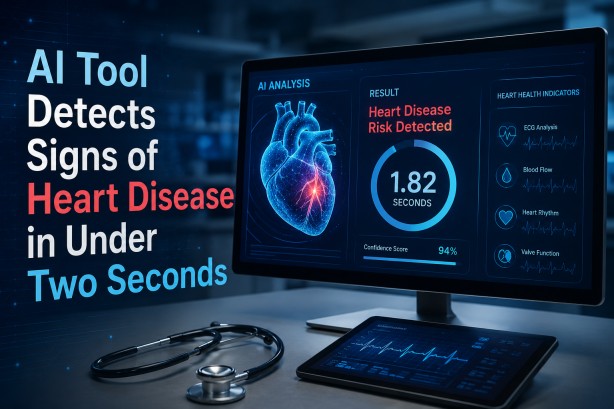
An innovative artificial intelligence tool has been developed by doctors to swiftly analyze routine electrocardiograms (ECGs) and spot patients who are at significant risk of heart failure and heart valve disease. This cutting-edge technology can complete its analysis in less than two seconds, offering a rapid assessment that could enhance early detection efforts.
Trained on a vast dataset comprising millions of ECGs, the AI system is adept at detecting subtle patterns that might elude doctors during traditional ECG evaluations. In a substantial trial involving 67,000 patients across the United States, the AI system demonstrated its efficacy by identifying up to 81% of individuals with heart failure and up to 90% of those with heart valve disease.
ECGs are among the most frequently used diagnostic tests globally, with approximately one billion conducted each year. Despite their prevalence, patients who are suspected of having heart disease often face extended waiting periods for echocardiograms, which are more detailed but less readily available. The AI tool is designed not to replace diagnostic processes but to assist healthcare providers in prioritizing high-risk patients for echocardiograms and further assessments, potentially allowing for earlier intervention and treatment.
Researchers involved in the project are optimistic about the broader applications of this AI technology. They suggest that it could eventually be used to analyze ECGs performed for other medical reasons, potentially flagging previously unnoticed heart conditions. This capability could significantly enhance the early detection of heart-related issues, even in patients who are undergoing ECGs for unrelated health concerns.
The development team is also exploring possibilities for creating portable AI-powered ECG devices for use by healthcare professionals. Such devices could make the early detection of heart conditions more accessible and expedient, potentially transforming how cardiac health is monitored and managed across diverse healthcare settings.