
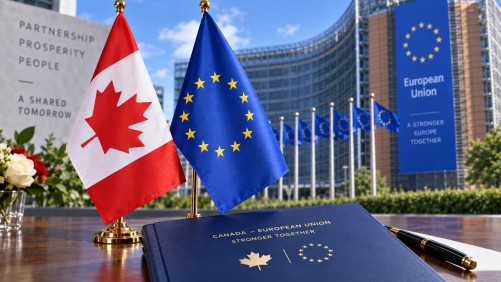
Amid shifting geopolitical landscapes and evolving trade dynamics, the European Union has extended an unprecedented invitation to Canada to become its first “associate member.” This proposal aims to deepen cooperation between the two entities, reflecting shared values and mutual interests on pressing global issues.
European Commission President Ursula von der Leyen highlighted the alignment between the EU and Canada on critical topics like artificial intelligence, climate policy, and global security. Both sides also hold common positions regarding the ongoing conflict in Ukraine. Von der Leyen emphasized the need to enhance the current EU-Canada trade relationship into a broader partnership, emphasizing economic security and shared prosperity.
The proposed associate membership is set to be a new form of relationship, as the EU currently lacks a formal category for such a membership. Details regarding the extent of Canada’s participation in EU programs and access to the single market remain under discussion. The EU and Canada plan to convene in October for a summit that will explore the future of their bilateral relationship.
Canada, which already maintains a trade agreement and various bilateral arrangements with the EU, views this development as an opportunity to diversify its international partnerships. Prime Minister Mark Carney has previously expressed a desire for closer ties with Europe, especially as Canada seeks to reduce its economic reliance on the United States.
The backdrop of this proposal includes increased tensions with Washington, prompting both Canada and the EU to explore alternative alliances and trade partnerships. As discussions continue, further clarity will emerge on how this potential partnership could operate and the benefits it may yield for both parties involved.