
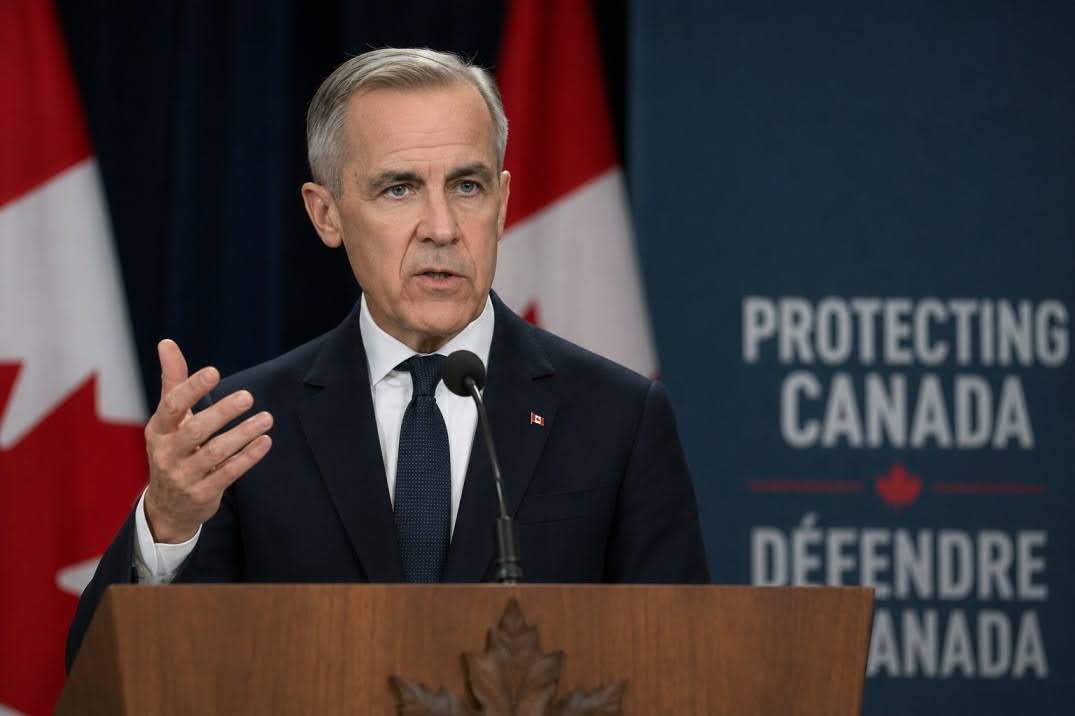
Canadian Prime Minister Mark Carney has expressed strong disapproval of the Trump administration’s approach to trade, urging U.S. officials to abandon ridicule and engage in serious dialogue. This call for a more constructive engagement comes just as Canada prepares to implement retaliatory tariffs on American products. Carney criticized the disparaging remarks aimed at Canada, deeming them unworthy of the high offices involved, and emphasized that meaningful trade negotiations could only resume if Washington shifted from superficial exchanges to substantive discourse.
The trade tensions have been escalating in recent weeks, highlighted by President Trump’s controversial decision to rename Lake Ontario as “Lake America,” a move that was met with widespread disapproval in Canada. Meanwhile, the chief U.S. trade negotiator has downplayed the consequences of this dispute, asserting that Canada would suffer more economically than the United States and stating plainly that no active trade discussions are currently taking place. This standoff follows the breakdown of U.S.-Canada trade talks about a week ago, after which the U.S. imposed hefty tariffs on $20 billion worth of Canadian goods. In retaliation, Canada announced its own tariffs on an equivalent value of U.S. goods, set to begin on September 8, with consumers on both sides bracing for the impact on everyday items.
The U.S. trade negotiator has attributed the collapse of negotiations largely to Canadian demands, such as the call for lower taxes on heavy-duty trucks, which he cited as a significant obstacle. He questioned Canada’s commitment to reaching a deal, suggesting that any Canadian move to restrict American goods could prompt the U.S. to implement similar measures. However, Canadian officials offer a different perspective, highlighting internal disagreements within the White House over leadership in the negotiations. Carney also pointed out that American negotiators viewed Canada’s French-language protections, particularly in Quebec, as a contentious issue, although he emphasized these are established rights.
President Trump has portrayed the ongoing trade conflict as a result of Canada’s desire for the benefits of closer ties with the U.S. without any formal integration, accusing Canada of long-standing high tariffs on American agricultural products. The U.S. trade negotiator admitted there was confusion over what was actually being negotiated, acknowledging that it was unclear whether the breakdown was due to political or economic reasons. He maintained that the options were never between the current tariffs and fully duty-free trade.