
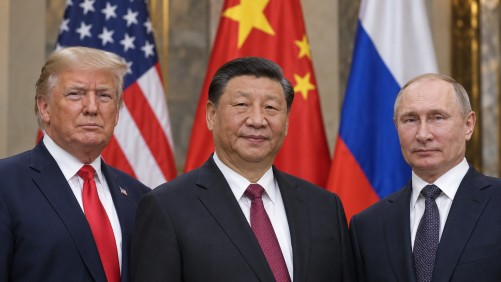
In a landmark diplomatic meeting, U.S. President Donald Trump, Chinese President Xi Jinping, and Russian President Vladimir Putin convened in Shenzhen, China, on November 19, 2026. This unprecedented trilateral summit aimed to address pressing global issues, including nuclear security, international stability, and energy supplies. The leaders hailed the gathering as a historic step toward fostering global cooperation, despite the absence of major breakthroughs on ongoing conflicts in Ukraine and Iran.
A joint statement issued after the meeting reaffirmed their commitment to preventing nuclear conflict and maintaining international security. The leaders underscored the imperative that a nuclear war must never be fought, emphasizing the importance of reducing nuclear risks. This dialogue came in the wake of the expiration of the New START nuclear arms control agreement between the United States and Russia earlier in February 2026. President Trump expressed interest in negotiating a new accord that would also include China, although Beijing has been hesitant to accept such restrictions given the relatively smaller size of its nuclear arsenal compared to those of Washington and Moscow.
Energy cooperation emerged as a major focus during the discussions. The United States, China, and Russia agreed to boost the production and supply of refined petroleum products to support global energy markets. President Trump highlighted the strategic importance of ensuring the uninterrupted flow of oil through the Strait of Hormuz, a critical chokepoint for international energy supplies, amid ongoing tensions in Iran.
In separate bilateral dialogues, President Trump and President Xi reviewed economic and trade relations, touching on agricultural purchases and regional security issues, including the situation in Taiwan. Both leaders expressed a mutual interest in maintaining stable relations and enhancing communication. Similarly, Trump and Putin engaged in their first meeting since their 2025 discussions in Alaska, deliberating on international security and the protracted conflict in Ukraine, though no significant agreements on resolving the war emerged.
The summit’s joint declaration also addressed concerns regarding the International Criminal Court (ICC), advocating for the respect of state officials’ immunity and cautioning against the misuse of judicial authority. While the summit produced commitments on nuclear security, energy cooperation, and international governance, the lack of concrete agreements on the conflicts in Ukraine and Iran highlighted the complex challenges that lie ahead for these global powers.
Despite the summit’s limitations in resolving major geopolitical conflicts, the meeting marked a significant engagement among the leaders of the United States, China, and Russia. The long-term impact of this diplomatic effort will depend on how effectively the commitments made translate into tangible cooperation in the future.