
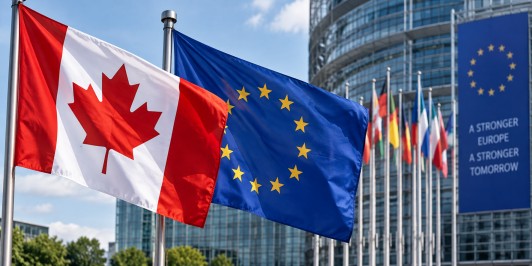
As tensions escalate between Canada and the United States over trade, Canada is turning its attention to strengthening bonds with the European Union. In recent diplomatic moves, Prime Minister Mark Carney has engaged with leaders from France, Germany, and Italy to explore opportunities for Canada to align more closely with the EU. The discussions have not veered toward full EU membership but rather focused on the possibility of establishing an associate membership, which would potentially grant Canada increased access to the EU’s single market.
The collaboration being considered targets strategic sectors that include energy, artificial intelligence, critical minerals, defense, technology, and infrastructure. Furthermore, Canada is contemplating enhancing its partnerships in fields such as research, higher education, data centers, telecommunications, and satellite networks. A significant aspect of this initiative involves expanding energy connections with Europe, which could lead to developing infrastructure that would allow Canadian natural gas to reach European markets, thereby assisting Europe in reducing its reliance on Russian energy sources.
This move is part of a broader strategy by Ottawa to diversify Canada’s economy and lessen its dependence on the United States, which currently absorbs approximately two-thirds of Canadian exports. By forging closer ties with the EU, Canada aims to open new avenues for economic growth and resilience.
However, European nations have approached these proposals with caution. While enhanced cooperation between Canada and the EU holds the promise of fresh economic opportunities, it also risks adding tension to the already complex relations between Washington and its European allies. The balance between fostering new partnerships and maintaining existing alliances remains a delicate one for all parties involved.