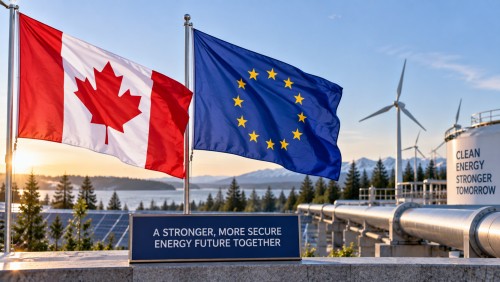
As Europe faces ongoing challenges in securing its energy supplies, a potential partnership with Canada is emerging as a viable solution to enhance energy security and decrease dependence on Russian energy. Discussions between Canadian Prime Minister Mark Carney and European Union leaders in Strasbourg highlight efforts to strengthen economic and strategic ties between Canada and Europe.
Canada’s abundant oil and natural gas reserves, along with its existing export infrastructure on the West Coast, position it as a key player in global energy markets. However, the current lack of direct export facilities on Canada’s eastern coast poses challenges for shipping energy directly to Europe. Developing such infrastructure could take multiple years, prompting both regions to consider alternative strategies.
One innovative approach under consideration is the implementation of energy swap agreements. This strategy would involve rerouting Canadian energy shipments initially destined for Asia to European markets. Such agreements would allow Europe to access Canadian energy resources without the need for direct transatlantic shipments, thus providing a more immediate solution to energy supply concerns.
The potential collaboration between Canada and the EU could also extend into the realm of clean energy. Canada is well-positioned to supply Europe with critical minerals essential for the clean-energy transition. These minerals are crucial for the development of renewable energy technologies and other low-carbon innovations, supporting the EU’s goals for a sustainable energy future.
By combining efforts in fossil fuels, critical minerals, and renewable energy development, Canada and the EU aim to create a comprehensive partnership that enhances their economic and energy security. As discussions progress, this potential collaboration could serve as a model for international cooperation in tackling global energy challenges.