
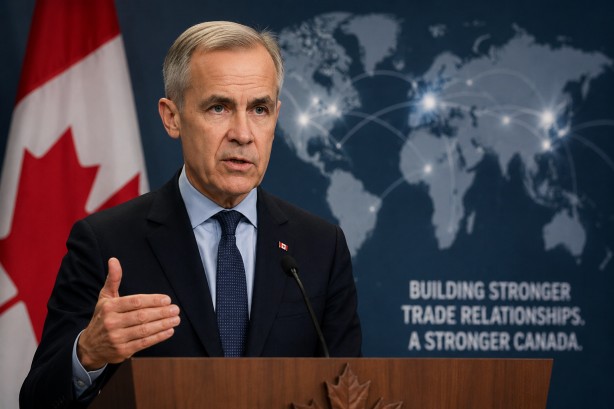
In recent speeches, Canadian Prime Minister Mark Carney has underscored a notable pivot in Canada’s approach to its relationship with the United States amidst shifts in the global landscape. Speaking at the World Economic Forum in Davos, Carney addressed the increasing fractures within the international order, calling for enhanced cooperation among middle powers. He stressed the importance of countries fostering alliances grounded in mutual interests to lessen reliance on any single global power.
Carney’s remarks come at a time when Canada has decided to withdraw from trade negotiations with the United States, a move prompted by ongoing disputes over tariffs and other trade policies. This decision marks a strategic step for Canada as it seeks to broaden its international partnerships and diminish its economic reliance on the U.S. While acknowledging the strong economic connections between the two nations, Carney underscored the necessity of safeguarding Canada’s sovereignty and prioritizing its long-term national goals.
The shift in Canada’s trade strategy indicates a broader effort to diversify its global engagements, reflecting a cautious stance in the face of persistent trade tensions with its southern neighbor. Carney’s focus on protecting national interests highlights a growing sentiment that Canada must look beyond its traditional economic ties with the U.S. to ensure future resilience and autonomy.
As Canada maneuvers to strengthen relationships with other global partners, the implications for North American economic cooperation could be significant. The ongoing trade tensions might influence the dynamics of regional economic collaboration, prompting Canada to seek new avenues for economic growth and stability.