
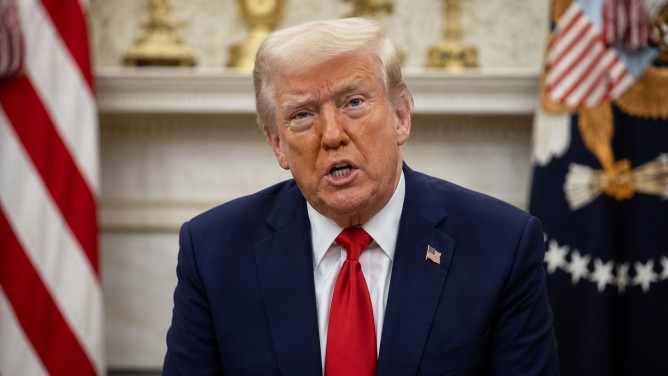
During a recent meeting with Lebanon’s president, U.S. President Donald Trump clarified that the planned tariffs on Canadian goods by his administration are unrelated to the wildfires that have caused smoke to drift into parts of the United States. Trump emphasized that the tariffs are a result of trade disagreements with Canada, rather than any environmental issues. He criticized Canadian leaders for what he described as unfair treatment of American farmers and reiterated his administration’s disapproval of Ottawa’s trade policies.
Speculation had arisen after Trump previously criticized Canada for not adequately managing wildfires, leading some to wonder if these environmental issues had influenced the U.S. trade policy decisions. However, Trump has now made it clear that the tariffs are strictly a response to trade matters. The White House has outlined plans to impose a 50 percent tariff on a wide range of Canadian imports, arguing that Canada has enacted discriminatory practices against U.S. products, including automobiles, dairy items, and alcoholic drinks.
Canadian officials have dismissed these claims and are calling for renewed discussions to resolve the ongoing trade conflict. They have expressed a desire to negotiate and find a solution that could prevent the implementation of the proposed tariffs. Without a mutual agreement, the tariffs are set to take effect in 30 days, potentially escalating tensions between the two neighboring countries.
The situation has led to heightened concerns over the economic stability and future trade relations between the United States and Canada. The proposed tariffs, if implemented, could have significant implications for both countries’ economies. Stakeholders on both sides are watching the developments closely, hoping for a resolution that would avert further economic uncertainty.